Travel Guide – In and Around Karavados Villas
One of the focal points of the village of Karavados is the Church of Saints Constantine and Helen, painted dark red and white with Venetian architectural details and a bell tower in the same colours, a simple place of worship that embodies the spiritual heritage of the village. Every year it comes alive on the 21st of May, when the Feast of Agii Konstantinos & Heleni (Constanine’s mother), takes place to honour Saints Constantine (aka Constantine the Great), the Roman Emperor who converted to Christianity and ended the persecution of Christians in the Roman Empire.
The festivities typically begin with a special service held in the church, which is attended by locals from the surrounding villages. After the service, a procession may take place to honour the Saints. The religious part of the festival is usually followed by a social celebration, where people gather at local tavernas for traditional Greek food, music, and dancing. While the event is more intimate compared to larger festivals, it has a warm atmosphere, with locals and visitors equally welcome. Should you be staying at Karavados Villas in May, don’t miss the opportunity to visit the church on this feast day.
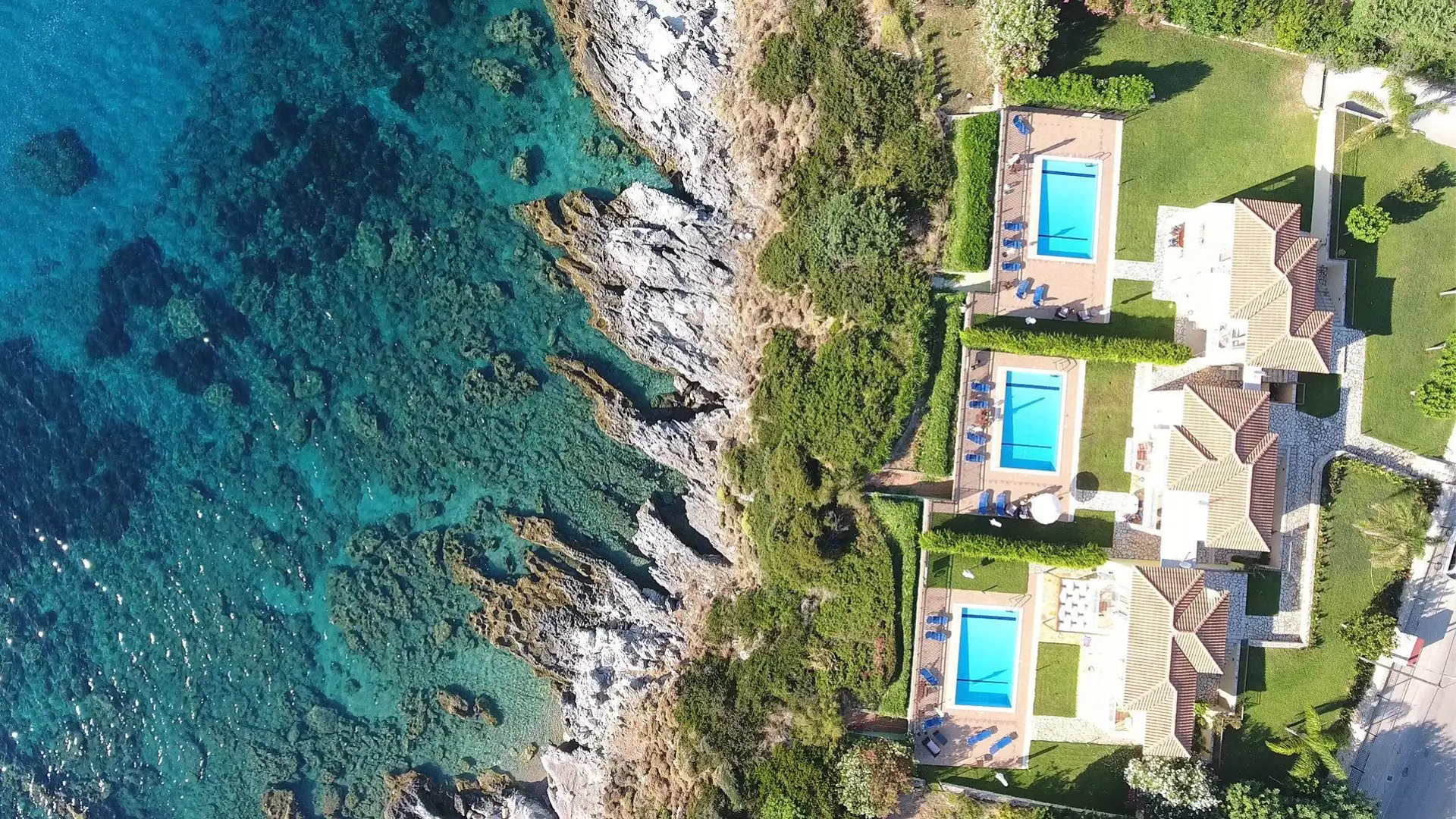
The area between Karavados Villas and the sea is still used for olive oil production with some farmers selling their produce locally. Nearby, in the village of Pessada, you will find an interesting little winery, called Divino Wines & Vinegar, which you can visit for a tour or to sample their wine (and vinegar). Much larger wineries, such as the Vassilakis Winery and Distillery and the Orealios Gaea Winery (winegrowers of the Robola grape variety), can be found in and around the village of Valsamata on the Omala Plateau (at 365m altitude).
Valsamata is approx. 20 min drive from Karavados Villas via the village of Moussata on a small windy country road leading through the olive groves on the foothills of Mount Ainos, or otherwise you can reach the area via the Epar. Od. Perataton Road. Hikers might enjoy the (alternative) 6.6km walk along a zig-zag dirt track through the olive groves, which leads up to the Winery in approx. 1h 40 min (recommended in low season only.)
The popular Robola Wine Festival takes place in Fragata, the village on the edge of Valsamata on the weekend following the 15th of August. It is an annual event held in celebration of the famous Robola wine, which (amongst other varieties) is produced on the island and has been awarded its own status of ‘Appellation of Superior Quality Wine’. During the festival, which is organised by the Robola Wine Companies on the Omala Plateau, locals and visitors have the chance to sample this popular wine, free of charge, and there is also food, music and dance to enjoy at this popular festival. A great day out if you are staying at Karavados Villas.
As mentioned, you can also reach Valsamata via the Epar.Od. Perataton Road at the bottom of the lane that leads to Karavados Villas, particularly if you wish to visit the Castle of Agios Georgios (St George’s castle) en-route. Valsamata is of course most famous for the 16th century Sacred Monastery of Agios Gerasimos, the patron saint of Kefalonia, and its lavishly decorated 20th century church and ornate chapel.
Agios Gerasimos, who was born in 1503 in Trikala, was ordained a monk at Mount Athos, then lived in Jerusalem for 12 years, before passing through Crete and Zakynthos and finally arriving in Kefalonia. Agios Gerasimos spent his first five years in a cave in the area of Lassi near Argostoli, then moved to Omala, where he cultivated the area where the monastery of Agios Gerasimos now stands.
The monastery, which he established, cared for the poor and became a charity centre. Saint Gerasimos died on 15th August 1579 and is said to have been buried and exhumed twice with his remains staying intact, thus leading to being recognised as a saint by the church in 1622. The tomb with the remains of Agios Gerasimos,can be visited at the monastery. The saint is said to perform miracles upon those who pray for his intercession. August 16th and the 20th October are the Feasts of Agios Gerasimos, when Kefalonians and visitors flock to the monastery to pay homage to the Saint’s relics.
Castle of Agios Georgios
Standing tall on a hill approx. 8min drive from our Karavados Villas, or an hour on foot for keen hikers, is the ‘Kastro’, the Castle of Agios Georgios, a Byzantine fort built on the site where once the church of Agios Georgios stood.
The Byzantine fort was expanded and became the administration and military centre for the western rulers who controlled the island from 1185-1435. After the Ottomans’ two brief occupations between 1479 and 1500, the Venetians conquered the castle after a 3-month siege that caused significant damage. The reconstruction of the castle began in 1504 and was completed by 1594.
Despite the damage inflicted to the Kastro during World War II by the British Protectorate, and by the devastating earthquake of 1953, it remains a significant work of fortification architecture and a testament to Kefalonia’s history. Within the ruined walls, you can find remnants of the Chapel of Panagia of the Guard, the Catholic Church of San Marco, the Church of San Nicolo, the governor’s house, barracks, cisterns, warehouses, and a gunpowder magazine.
If you are interested in our Karavados Villas, or a villa in one of the other villages in this area of Kefalonia, such as Trapezaki, Lourdas or Spartia, please do not hesitate to contact us. If you need any help with booking one of our Karavados Villas, we are happy to help and only a chat or phone call away.








 and then